
To better understand research paper mills, predatory publishers and other players in the scientific gray market, I spend a lot of time in shady Facebook, Telegram and WhatsApp groups where businesses in these markets advertise their services. These groups will often disappear without notice when subjected to outside scrutiny, so I will not link to any one of them directly so as not to upset their delicate habitats. If you are interested in perusing such groups, they are not hard to find: put yourself in the shoes of a researcher in desperate need of published articles on their CV and begin querying any search engine or social media in whatever language for the kind of things such a person might look up. “call for authors”, “authorship available”, “Scopus publications”, “UGC Care publication” and “fast publication” will quickly bring you to dozens of groups with tens of thousands of members.
You will find a wide diversity of opportunities and services advertised here: ghostwriting for scientific articles, ghostwriting for theses, guaranteed fast publication in indexed journals, participation in conferences of dubious provenance, CV-ready awards and certificates of dubious merit, authorship slots on pre-written papers, authorship on a submitted article in exchange for footing the journal’s article processing charge, access to premium plagiarism software (only to be used for good), etc. As in any bot-riddled online space, there is also a lot of pornography. I suggest staying off your work computer when diving into these groups.

These advertisements are usually not forthcoming with specifics about their “special opportunity”, such as the title of the paper you are buying or the journal in which it will be published. One usually must follow an email or WhatsApp number to get this information. Leaving a public paper trail leaves clientele vulnerable to being found out by someone like Nick Wise, who is adept at linking advertisements for authorship slots to their final published product (see PubPeer). These positive identifications of paper mill products can help metascientists map clandestine networks in the published scientific literature.
If you find a paper mill advertisement that does contain identifying information and sufficient time has passed, you can often find the exact title published later with little or no modifications. For instance, take “An Intense Systematic Review of Mobile Agent Based Harmful Threats And Attack Detection Systems in IOT Networks“, published on July 24, 2023 after being advertised for sale verbatim on Telegram on August 27, 2022.

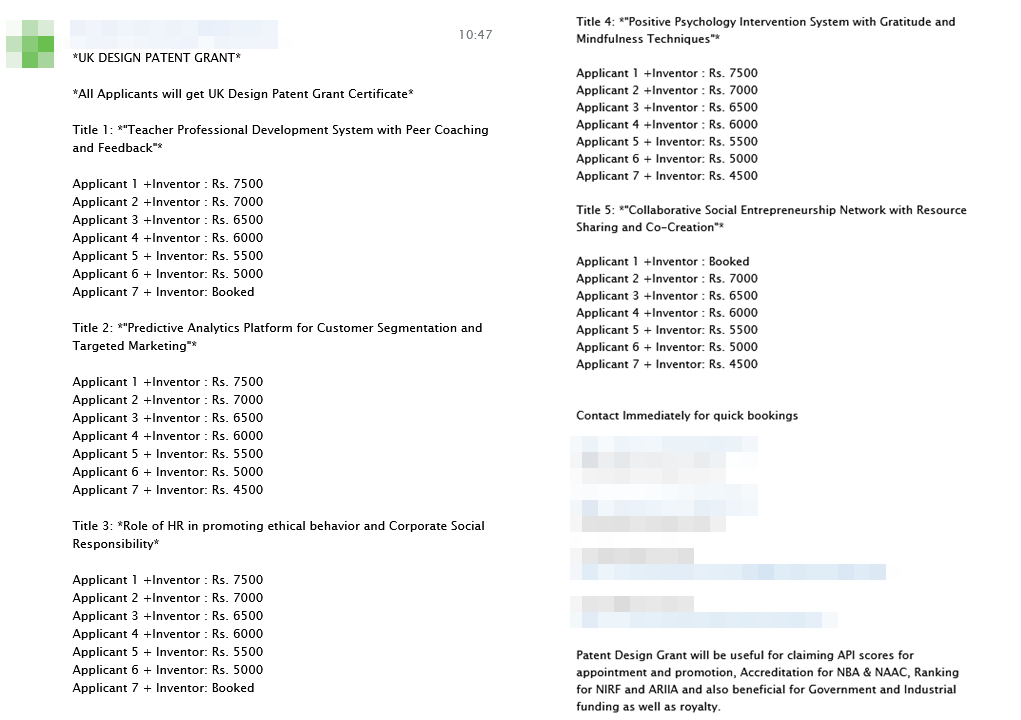
Around this time last year, I noticed that these channels increasingly featured advertisements for a new commodity: inventorship positions on patents. I brought my observations to Nick Wise, who had independently discovered the same trend. It seemed that most advertisements offered inventorship positions on “design patents” in the United Kingdom.
Holding one or many patents is already an accolade for individuals, companies and universities. These parties also stand to benefit financially from exclusive rights over patented technologies and ideas. Universities further covet patents because many systems for ranking universities consider the number of patents held or applied for by faculty in their scoring systems. In India, patents are considered for National Institutional Ranking Framework (NIRF) rankings and factored into accreditation and grading decisions by the National Board of Accreditation (NBA) and the National Assessment and Accreditation Council (NAAC), all official organs of India’s national government. Patents also factor heavily into faculty performance evaluations and promotion decisions in India.
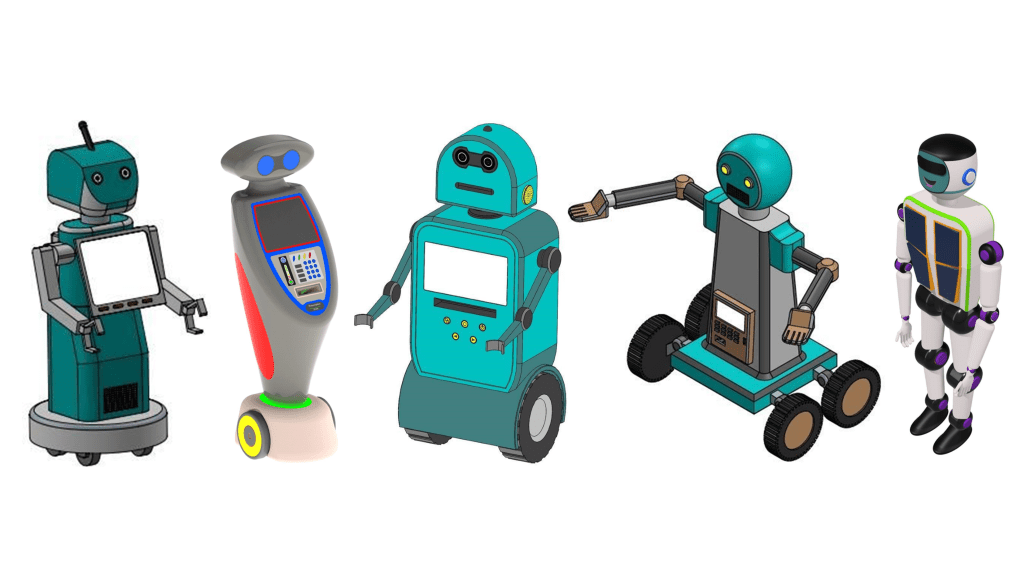
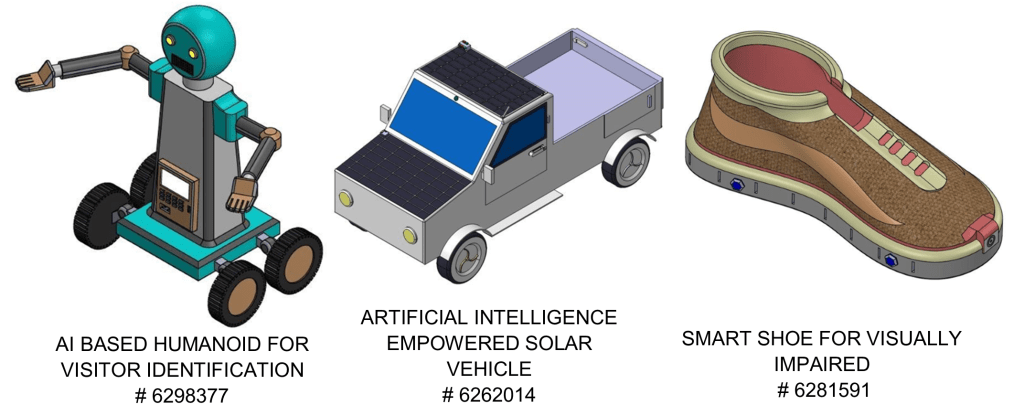
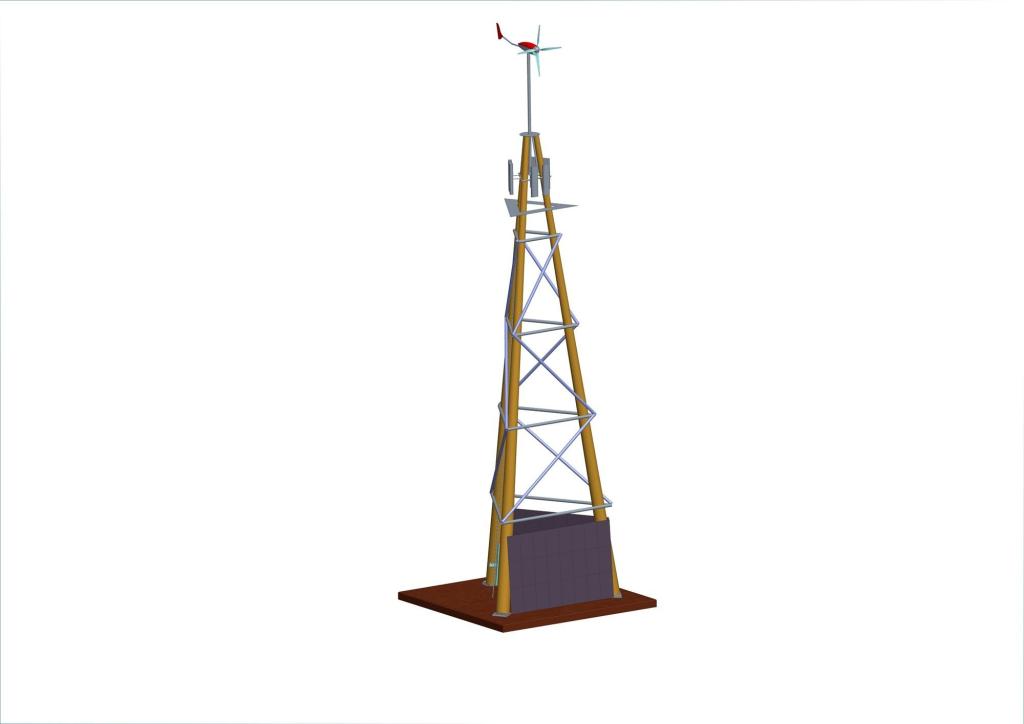
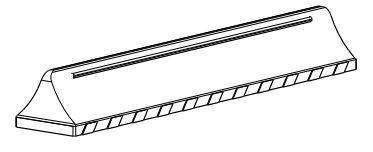
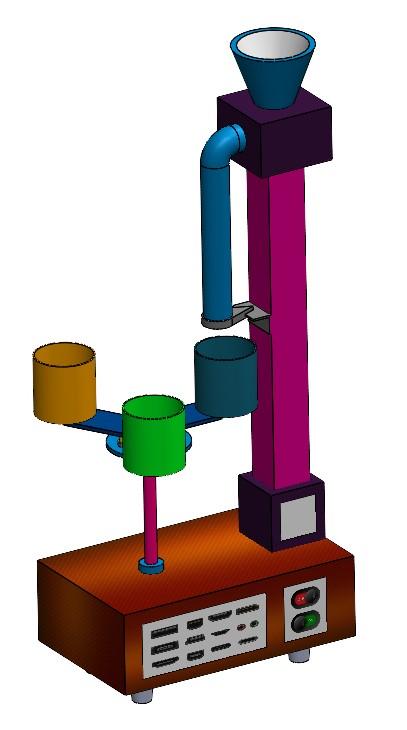
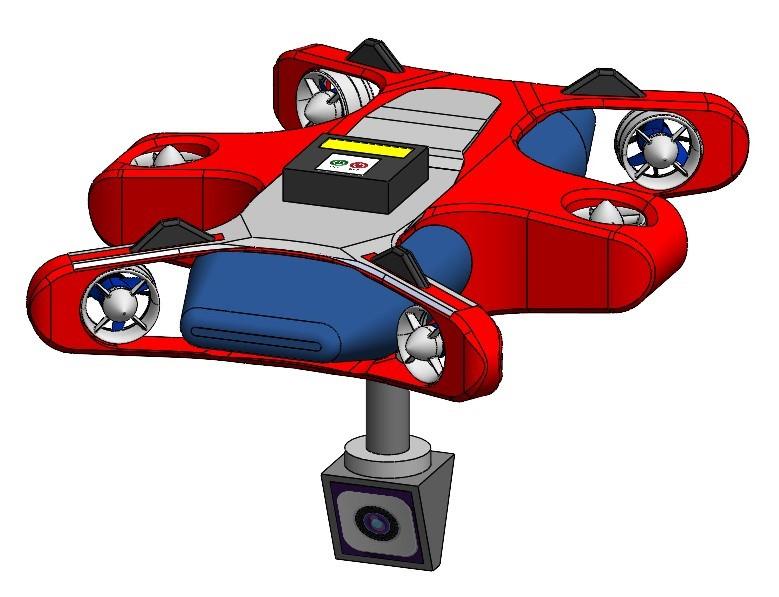
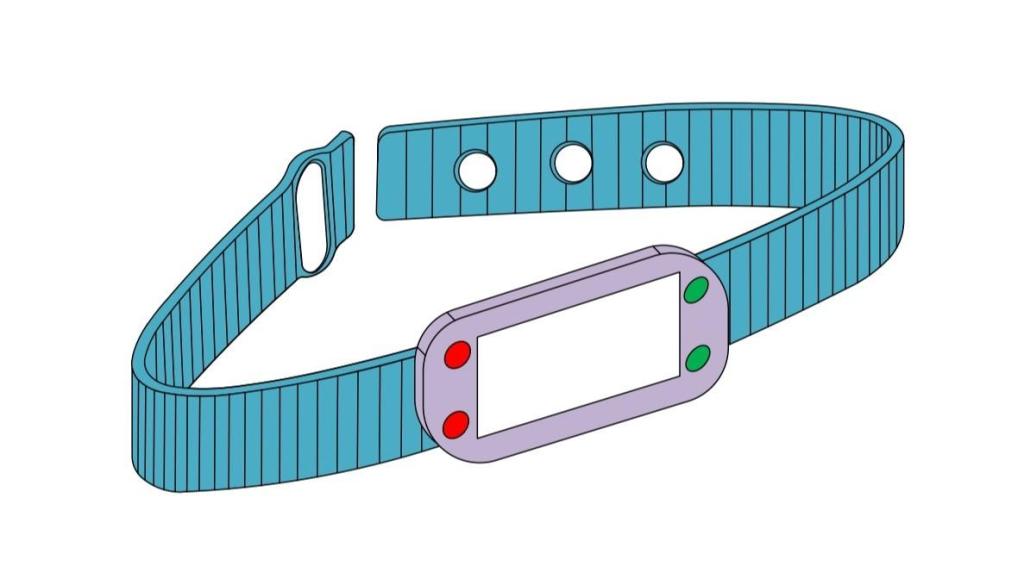
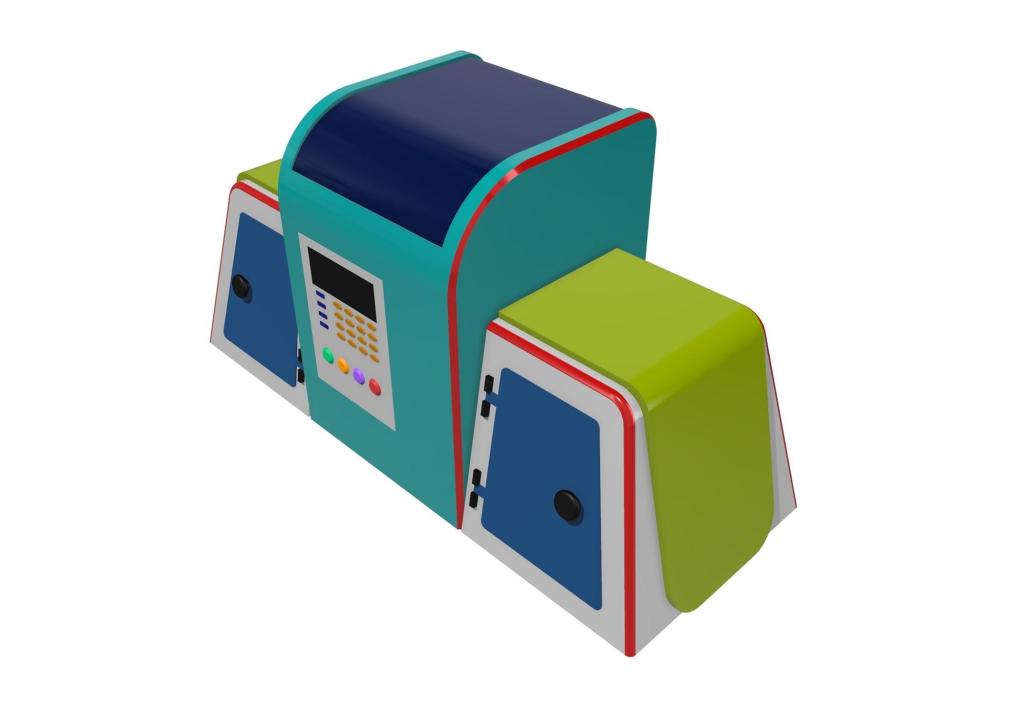
To investigate further, Nick (then of the University of Cambridge, now at Taylor and Francis) and I joined forces with my labmate and document intelligence expert Spencer Hong of Northwestern University and eminent education fraud expert Michael Draper of the Hillary Rodham Clinton School of Law at Swansea University. We linked more than 20 advertisements in these groups to “design registrations” that had been granted in the UK with descriptions as “AI Based Collapsible Metal Detector” and “ML Based Robot for Determining Crop Yield”. All had been filed by one of two firms. These designs filed by these firms tended to have silly product descriptions and even sillier illustrations. We then found an additional six companies that had all begun filing similar designs after Jan 1, 2023, all almost exclusively on behalf on Indian academics.
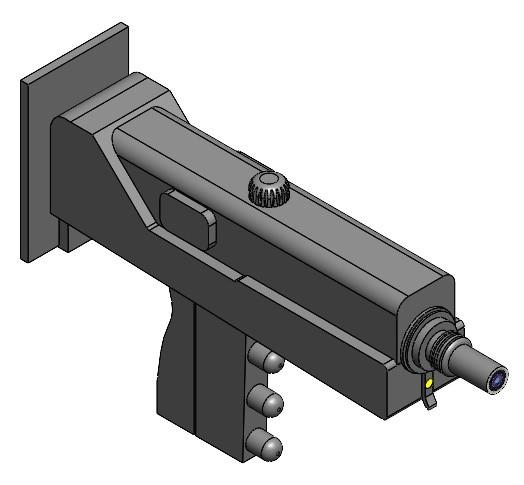
Many of the designs filed by these firms appear to blatantly copy existing products. For instance, this “skin cancer inspection device” is a Glock.

After we gathered all the evidence we could, a critical discussion with the incomparable public interest technology lawyer Kendra Albert revealed a crucial point that we had missed: these were not design patents at all, but design registrations. Among other distinctions, this means that these designs were only subject to a limited review before being granted and we not examined for novelty at all. As a result, effectively anything could be registered as a design in the UK (and on a far shorter timeline than would be expected for an actual design patent). This also implied that all of these firms were lying to their clientele by claiming that they would be “inventors” on “patents” if they contracted their services.
Note also that design registrations cover the way a product looks, not the way a product functions. Thus, whenever the name of the product implies functionality (anything “AI-based…”, “ML-enabled…”, etc.) it is purely for show, possibly to give the impression that these are real patents. Most genuine design registrations will have a very succinct product indication like “helmet” or “remote control”.
Kendra connected us with the preeminent design patent law expert Sarah Fackrell of the Chicago-Kent College of Law at the Illinois Institute of Technology. Together, we wrote a manuscript on our findings that has since been accepted at the International Journal for Educational Integrity. Our manuscript has many more details than can be included in this blog post, so check out the pre-print the now-published (April 21, 2025) article here. You can also check out coverage of this work by Cathleen O’Grady for Science.
Reese AK Richardson, Nick H Wise, Spencer S Hong, Michael J Draper and Sarah Fackrell. “Exploitation of intellectual property systems for the manipulation of academic reputations”. International Journal for Educational Integrity 21, 15 (2025). https://doi.org/10.1007/s40979-025-00185-8
Overall, we hope readers take away two main points:
- The industry of education and academic fraud is large, diverse and growing in the scope of services offered.
- If any achievement is counted up to use as a heuristic for assessing individual or institutional reputations, someone will be selling a cheapened, fraudulent version of that achievement.
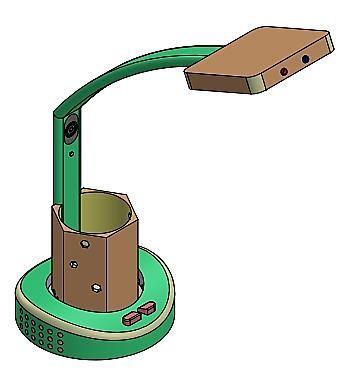
I’ll add more ludicrous examples of design registrations made by these firms to the bottom of this post as I find time.
Collected favorites filed by these firms:

“ROBOTIC DEVICE FOR ENGLISH LANGUAGE TEACHING” (#6296817) was filed on 17 July 2023. Note that 1) the wheels would not spin as shown and 2) the chassis of this robot is identical to that of Disney/Pixar IP WALL-E.


 Reese Richardson
_%D0%B1%D0%B5%D0%B7_%D1%84%D0%BE%D0%BD%D0%B0.jpg)

.png)
Leave a comment